Get to Know Our Founder
Atlas Charles: Consulting from Experience
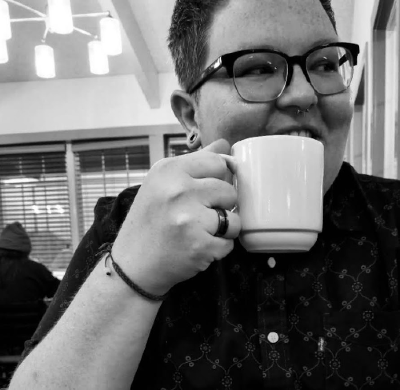
There's a version of this post where I list my credentials, name the organizations I've worked with, and tell you I'm passionate about helping leaders thrive.
I'm not going to write that one.
If you're here, you probably already read the Founder page. You know the broad arc. This is the longer version—where I came from, how I learned to think the way I do, and why any of this matters to me beyond the work itself.
It's the post I'd want to read before deciding whether to trust someone with the hard stuff.
Early Patterns Formed in Place
I grew up in a holler community tucked into the Cumberland Mountains of Central Appalachia—a place of natural wonder, kind folks, and deep, structural struggle.
My family went between being poor and working class. My dad worked logging and mining jobs, until his back was crushed at age 26. My mom worked service jobs, until she became disabled in her late 40s.
We were rooted in a place that took care of its own but demanded hard and damaging work in return.
I was also queer and autistic in a place and time that didn't have much language for either of those things. I figured out early how to read rooms, read people, and read situations—not because I was gifted at it (quite the opposite as autistic!) but because I had to be.
What that place taught me—what it trained into me before I had words for it — was how to read systems. Not in an academic way. In an everyday, inescapable way. I call that "homegrown systems thinking."
I learned early that the jobs that put food on our table also degraded the land and water we depended on. Economic decisions made in boardrooms and backrooms and legislatures far away had consequences that showed up in our towns, our schools, our health.
Benefits flowed outward. Harms stayed local. Inequality wasn't a concept—it was the view from every road in every holler I knew.
I learned to notice:
- How systems concentrate benefit and distribute harm.
- How short-term extraction erodes long-term capacity.
- How "economic necessity" often masks structural choice.
- How incentives shape what feels possible.
- How power and history shape the conditions decisions get made in.
These patterns were the texture of ordinary life.
And they became the lens I've carried into every organization, every leadership challenge, and every client engagement since.
From Small Business to Structural Insight
I was 23 when I burned out for the first time.
I was a public school teacher, committed to my students and my community, running on belief and very little else.
I taught Biology and Statistics in a historically low-income school system serving mostly students of color. The system I was working inside was not built for the kids I was trying to empower, and it was not built for teachers who took that seriously, let alone when those teachers were neurodivergent.
I left teaching after developing debilitating panic disorder: exhausted, burnt out, pretty broken, and determined to find work that felt like it could actually change something.
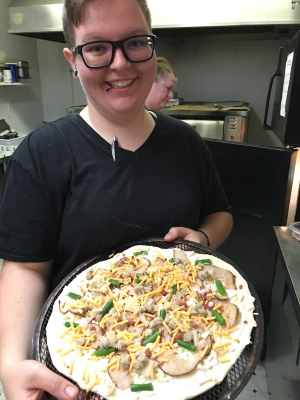
I was 24 when I bought a failing eatery in my hometown—no roadmap, no mentor, no one to help me see what actually mattered. I had only left teaching months before. The margin for error was razor thin. The isolation was overwhelming. Every decision — staffing, pricing, what to cut, what to protect—fell entirely on one person.
I needed a thought partner. Someone who could help me identify the few leverage points that would actually change the trajectory. That person didn't exist in my network. No one understood what I was actually carrying.
Atlas Charles, Founder
We found our way through anyway. Took it from losses to healthy profit, expanded the market area, made it a locally-loved spot that gave back to the community. But the experience that stayed with me wasn't the turnaround. It was what it cost to carry those decisions alone—and what changed when I eventually found the right person to think with.
That contrast became the foundation of everything that followed.
Patterns Repeated in Larger Systems
Over the next decade, I built a career across businesses, nonprofits, public education, and social enterprises—navigating funding crises, leadership transitions, board realignments, organizational restructuring, and the particular weight of trying to do meaningful work inside systems that weren't built for it.
At 28, I burned out for the second time. I was serving as CEO of a nonprofit navigating a funding transition, leadership turnover, board realignment, and a full rebrand — all at once. The stakes were different than the pizzeria. The scale was larger. But the patterns were identical. And the isolation was worse, because the expectations were higher and the people depending on me were more visible.
We restructured strategy, rebuilt trust with funders, and repositioned the organization to sustain itself. What made the difference wasn't just what we did — it was how decisions got made under pressure, and the leadership actions that followed.
At 33, I burned out a third time, leading a consulting firm through a pivot while federal funding cuts were destabilizing the nonprofit clients we served. That pivot required restructuring roles, revenue models, operations, and methodology simultaneously.
This time, I had an experienced partner thinking and working alongside me through it. That partnership didn't make decisions easier, but it made the thinking clearer and the leading less lonely.
A partner to think with, learn with, make decisions with, and, most of all, be less lonely with, changed leadership forever for me. Going it alone is never again an option I will accept.
Each burnout wasn't just exhaustion. It was a reckoning.
With the leadership models I'd inherited. With how much I was carrying alone. With who I was choosing to be—not just for clients, but for the people I love—and with the life I was choosing to live.
I had to learn, three times, that the way most of us are taught to lead — head down, self-sufficient, push through—is not sustainable. It's not even effective. It's just familiar. And familiar is not the same as right.
Those reckonings changed me.
They're also why I can sit with leaders in genuinely hard moments without flinching, without offering easy answers, and without making them feel like something is wrong with them for struggling.
Atlas Collaborative exists because the right thought partner changes everything— not by handing you answers, but by helping you see your situation clearly enough to find them yourself.
I've been there. I know what it actually costs.
Here's the why behind why I consult, and why it matters:
Our outdated leadership and organizational models—the ones that treat people, organizations, and futures like mechanisms to be optimized—have a real cost. These models grew from an era of industrial labor and thought, that we've seen impact our collective wealth: land, air, water, health.
I've paid the costs these models exact. My family paid it. My community paid it. The leaders I work with are paying it. And the organizations and communities those leaders serve pay it, too.
But the alternative and opportunity is real and attainable.
When organizations are led in ways that genuinely unleash people's creativity, wisdom, participation, and care—they don't just perform better. They become part of building something larger. Futures where well-being, equity, and regeneration aren't aspirational talking points. Futures where they're the norm—conditions people can't imagine living without. And we can get there in the next 50 to 100 years, which isn't that long in our historical arch.
Organizations are the vessels through which society will be able to develop innovative solutions (or destructive ones); implement those innovation solutions (or continue to utilize our degenerative ones); and affect conditions at a large scale that enable all of us to benefit (or continue to only allow a few to proper at the expense of many of us).
In other words, organizations create the conditions for all of life to thrive or suffer.
I grew up queer and autistic and poor in the coalfields of Appalachia. I know what it means to live in a place that systems forgot, or worse, extracted from. And I know—not as a theory but as a lived belief—that the organizations we build and lead today are shaping the conditions for what the lives of our families today and for generations to come will be like. And I am choosing to work for futures where abundance, well-being, and equity are ubiquitous givens, not aspirations.
Put another way:
I do this work to co-create futures where kids like me—queer, autistic and poor–and their neighbors in places like the rural Appalachian coalfields live joyful, full, authentic lives.